Battery-Powered vs Hard-Wired GPS Trackers: When to Use Each

Our mission is to help businesses connect, protect, and derive more value from their assets. As a leading global innovator, developer, and supplier of IoT solutions, we drive continuous innovation to enable our partners to deploy confidently at scale worldwide.

Assets with a constant power supply can support hard-wired GPS tracking hardware capable of aggressive reporting and advanced telematics functionality. Non-powered assets require battery-powered tracking devices engineered to maximize battery life while still delivering reliable tracking and operational visibility.
Both approaches provide location updates and GPS tracking capabilities, but they operate very differently in terms of installation, maintenance, reporting behavior, and long-term operational costs.
Battery-powered asset trackers prioritize low-power operation, adaptive reporting, and long lasting battery life. Hard-wired systems focus on real time tracking, driver behavior monitoring, and continuous access to powered vehicle systems.
Digital Matter offers one of the industry’s most extensive portfolios of GPS tracking and asset management hardware for both powered and non-powered assets. From compact battery-powered trackers for trailers and containers through to feature-rich wired telematics devices for heavy equipment and fleet vehicles, the platform is designed to support a broad range of industrial IoT applications.
In this guide, we explain how each tracking approach works, when to use each type of hardware, and how to match the right solution to the operational realities of your assets.
What are Battery-Powered GPS Trackers?
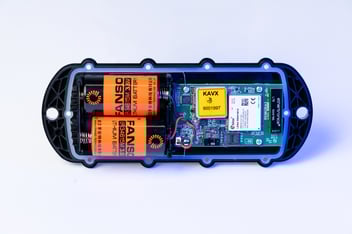
Battery-powered tracking devices are designed for assets without access to a permanent power source. These independent tracking systems use internal batteries such as, lithium, alkaline and lithium thionyl chloride (LTC) to operate entirely on their own without requiring wiring into an asset’s electrical system.
This makes them ideal for non-powered assets that:
- Sit idle for long periods
- Move unpredictably
- Are frequently detached
- Cannot support wired installation
Digital Matter’s “Deploy Once” philosophy centers around designing low-power GPS tracking devices capable of operating for years without servicing or battery replacement.
Deploy Once Long Battery Life
Unlike consumer GPS trackers that often require frequent charging, industrial battery-powered devices are engineered for multi-year deployments.
Digital Matter devices can achieve:
- Up to 10+ years of battery life
- Up to 20 years in some configurations
- Long lasting battery life under movement-based tracking profiles
This dramatically reduces operational overhead for businesses deploying thousands of asset trackers across distributed fleets. Instead of frequent servicing, maintenance teams can focus on operations while devices remain deployed in the field for extended periods. It's also especially valuable when assets are in regions and environments where physical access is difficult or expensive.
Smart Tracking Logic
Battery-powered GPS tracking relies heavily on intelligent power management. Because there is no external power source, devices must conserve energy carefully while still maintaining useful visibility.
Digital Matter devices use several smart tracking techniques to extend battery life:
- Adaptive reporting
- Movement-based tracking
- Sleep and standby mode behavior
- Accelerometer wake-up logic
- Recovery mode tracking for theft events
For example, a tracker may:
- Enter standby mode while stationary
- Wake only when movement occurs
- Increase reporting frequency while moving
- Reduce updates during inactivity
This allows devices to provide reliable tracking without unnecessary power consumption. Movement detection uses onboard 3-axis accelerometers that detect vibration, impact, tilt, and motion. The same technology also enables instant movement notifications and geofence alerts whenever assets move unexpectedly.
Covert Installation
One major advantage of battery-powered GPS units is installation flexibility.
Because there are no wires to trace, devices can be covertly mounted using:
- Screws
- Rivets
- Bolts
- Adhesive mounts
- Magnets
The result is faster deployment and improved theft resistance. For assets operating in high-risk environments, concealed installation also increases recovery potential by making devices much harder to locate and disable.
Ideal Asset Types
Battery-powered tracking devices are best suited to:
- Trailers
- Dollies
- Shipping containers
- Skip bins
- Livestock
- Returnable packaging
- Pallets
- Rental assets
These assets often spend long periods disconnected from power, making wired telematics impractical.
Digital Matter's Battery-Powered Solutions
Oyster Family
The Oyster family is the standard for rugged non-powered GPS tracking.
Featured Devices
Ideal for trailer tracking and industrial deployments, these devices feature:
- IP68-rated housing
- LTE-M and NB-IoT connectivity
- Long battery life
- Flexible reporting profiles
Remora Family
The Remora family is designed for aggressive reporting and extreme longevity.
Featured Devices
Particularly effective for high-value asset recovery applications, these devices usie large D-cell LTC batteries and support:
- Live tracking
- Instant alerts
- High-frequency updates
- Magnetic tamper detection
- Extended battery performance
Yabby and Barra Families
The Yabby and Barra ranges provide compact, low-cost tracking solutions for high-volume deployments.
Featured Devices
These devices are ideal for applications where deployment scale and hardware footprint are priorities, including:
- Small tools
- Pallets
- Livestock collars
- Logistics assets
What are Hard-Wired GPS Trackers?
Hard-wired GPS trackers connect directly into a vehicle or machine’s power system. Unlike battery-powered devices, they draw continuous power from the asset itself, allowing them to support aggressive real time tracking and advanced telematics functionality without battery limitations.
Depending on the application, these systems are commonly installed through:
- 3-wire ignition installs
- Direct battery connections
- OBDII ports
Continuous Power Equals Continuous Data
Because hard-wired devices are permanently powered, they can support continuous reporting, live tracking, real-time tracking, high-frequency location updates, and persistent sensor monitoring without concerns about battery drain. Battery confidence is especially important for vehicles and machinery operating throughout the day.
Fleet managers often require frequent updates, route visibility, driver monitoring, engine diagnostics, and utilization reporting, all of which benefit from continuous power availability.
Advanced Telematics Features
Hard-wired devices provide access to far more than location data.
By integrating into vehicle ignition systems and ECUs, they can capture operational telemetry such as:
- Driver ID
- Ignition status
- Harsh braking events
- Run-hours
- Utilization data
- Vehicle speed
- Idle behavior
This information supports asset management, operational optimization, and preventative maintenance workflows.
For construction equipment and powered machinery, run-hour visibility becomes especially valuable for maintenance scheduling and utilization tracking.
Active Control and Security
Hard-wired telematics systems can also support active security functionality.
Capabilities may include:
- Remote immobilization
- Theft response workflows
- Unauthorized usage detection
- Driver authentication
- Impact detection alerts
The level of control this delivers is particularly useful for applications where unauthorized operation creates operational and financial risk, such as:
- Rental fleets
- Heavy equipment
- Company vehicles
- Mobile generators
Digital Matter Hard-Wired Solutions
Dart3 BLE
The Dart3 is a flexible fleet telematics device supporting:
- Driver ID
- Ignition monitoring
- I/O integration
- Driver behavior monitoring
It is commonly used across fleet and operational vehicle deployments.
G150 Global
The G150 Global is designed for international asset visibility and advanced telematics.
Features include:
- Global Cat 1bis connectivity
- Bluetooth support
- Remote immobilization
- Extensive I/O functionality
This makes it suitable for globally roaming powered assets.
G70 BLE
The G70 BLE supports rugged industrial deployments requiring:
- Real time tracking
- Impact monitoring
- Driver management
- Harsh environment durability
Its IP68 and IK08-rated housing makes it particularly suitable for industrial vehicles and equipment.
Bolt2
The Bolt2 provides a plug-and-play alternative using OBDII installation.
This allows businesses to deploy GPS tracking rapidly without requiring advanced installation expertise.
The device also includes:
- Internal backup battery
- Driver behavior monitoring
- Vehicle trip visibility
These features make it ideal for fleet deployments needing rapid rollout.
The Decision Matrix: Matching the Tracker to the Asset
The best tracking hardware depends on how the asset behaves in the real world.
Scenario A: The Flatbed Trailer (Choose Battery-Powered)
Flatbed trailers are regularly disconnected from powered vehicles and may sit idle in yards for days or weeks. A wired tracker relying on trailer power becomes ineffective once disconnected from the cab.
A battery-powered GPS tracker such as the Oyster3 is far more suitable. The device can be covertly installed and provide:
- Theft protection
- Long battery life
- Location updates
- Geofence alerts
- Recovery mode visibility
All without requiring any external power source.
Scenario B: The Construction Excavator (Choose Hard-Wired)
Construction excavators are high-value capital assets that operate continuously throughout the workday.
Operations teams often need visibility into:
- Engine run-hours
- Utilization
- Driver behavior
- Preventative maintenance schedules
- Unauthorized operation
A hard-wired device such as the G150 provides this level of operational telemetry while supporting live tracking and remote immobilization functionality.
Scenario C: Cold Chain Logistics (Choose the Hybrid Approach)
Many real-world IoT deployments combine both battery-powered and hard-wired systems.
For example:
- A hard-wired tracker in the truck cab provides route visibility and vehicle telemetry
- A battery-powered Bluetooth gateway on the trailer monitors temperature tags inside the cargo area
Devices such as the Oyster Edge support this architecture by combining:
- Battery-powered operation
- Bluetooth sensor scanning
- Cloud-Based Location Solving
- Indoor and outdoor location visibility
This hybrid model enables temperature monitoring and condition visibility across detached trailers without relying on continuous trailer power.
Installation and Maintenance Considerations
Installation and servicing requirements differ significantly between the two hardware categories.
Battery-Powered Installation
Battery-powered trackers are designed for rapid deployment.
Installation often takes only minutes using:
- Screws
- Magnets
- Adhesive mounting
- Rivets
No electrical expertise is required. Once deployed, maintenance remains minimal until the battery eventually requires replacement years later. This simplicity makes battery-powered tracking highly scalable across large fleets of non-powered assets.
Hard-Wired Installation
Hard-wired systems require connection into the vehicle or equipment power system.
This generally requires:
- Basic automotive electrical knowledge
- Ignition wiring access
- Secure cable routing
- Power testing
Deployment takes slightly longer than battery-powered systems but eliminates battery replacement concerns. For organizations seeking simpler installation, devices such as the Bolt2 provide a plug-and-play alternative using the OBDII port.
Proven Success: Real-World Applications
Digital Matter tracking devices support large-scale deployments across industries worldwide.
Scaling Logistics Asset Tracking with EMIL EGGER
Swiss logistics company EMIL EGGER needed a more efficient way to track and manage more than 300 swap-body freight containers moving across Europe. Manual processes were slow and prone to errors, making it difficult to maintain accurate visibility over valuable logistics assets.
Working with SmartMakers and Digital Matter, the company implemented a scalable asset tracking solution that improved visibility and reduced reliance on manual tracking. The deployment demonstrates how the right combination of GPS hardware, connectivity, and software can support large-scale logistics management while improving operational efficiency.
Read the full EMIL EGGER case study
Train Tracking and Speed Monitoring with Gisborne City Vintage Railway
The Gisborne City Vintage Railway Society in New Zealand needed reliable visibility into the location and speed of its historic Wa165 steam locomotive during passenger excursions. Digital Matter's Oyster2 GPS tracking device was installed on the train to provide location and speed monitoring through a centralized platform.
The solution can provide instant movement alerts when activity is detected and activate real time tracking when greater visibility is required. Historical speed and location data also provides valuable information when the train approaches public road crossings, demonstrating how GPS tracking hardware can support specialized transportation applications where visibility and accurate records matter.
Read the full Vintage Train Tracking case study
Monitoring, Alerts, and Tracking Visibility
Modern GPS tracking platforms provide far more than simple location monitoring. Many units offer configurable low battery alerts, push notifications, and historical data reporting to help operational teams maintain visibility across assets and vehicles without constant manual monitoring.
Through a tracking app or web-based platform, users can enable real-time tracking when higher visibility is required, while still allowing devices to return to low-power mode during normal operation to preserve battery life.
Additional key features often include geofence management, movement alerts, reporting controls, and centralized access to fleet and asset data across large deployments.
Asset Tracking Devices: Choosing the Right Power Strategy
The choice between battery-powered and hard-wired GPS tracking ultimately comes down to how the asset operates.
If the asset:
- Has an engine
- Maintains constant power
- Requires advanced telematics
Then a wired solution is usually the better fit.
If the asset sits idle for long periods, is regularly disconnected or lacks reliable power, battery-powered tracking devices provide a more practical solution. In many operations, the most effective asset management strategy combines both technologies within a unified tracking platform.
Battery-powered trackers provide visibility across trailers, containers, and mobile assets, while wired telematics devices deliver rich operational data from powered vehicles and machinery. With more than 25 years of low-power engineering experience, Digital Matter provides one of the industry’s broadest hardware portfolios for GPS tracking and IoT asset monitoring.
Contact us today or use our helpful Device Finder to find the perfect device for you.

Melissa Craig - Digital Marketing Manager
Melissa Craig is a Digital Marketing Manager at Digital Matter, with a background spanning marketing analytics, customer experience, and data-driven strategy. She holds a Bachelor of Commerce in Marketing from Curtin University and brings several years of experience analyzing customer journeys, performance data, and system workflows across technology and services environments. Prior to joining Digital Matter, Melissa led customer experience and process-mapping initiatives, translating complex data and operational insights into practical recommendations. At Digital Matter, her work supports educational content and analysis related to IoT asset tracking, GPS deployment, and how connected devices are adopted and evaluated by businesses. Focus areas: IoT and asset tracking use cases, customer journey analysis, data and performance insights, adoption and optimization of connected technologies.