Trailer Temperature Monitoring: GPS + Sensor Systems for Cold Chain Visibility

Our mission is to help businesses connect, protect, and derive more value from their assets. As a leading global innovator, developer, and supplier of IoT solutions, we drive continuous innovation to enable our partners to deploy confidently at scale worldwide.

Poor cold chain logistics result in staggering annual losses. Estimates suggest more than $35 billion is lost annually in the pharmaceutical industry alone due to temperature-controlled logistics failures. In the food sector, inadequate infrastructure contributes to an estimated 526 to 620 million metric tons of food loss each year, representing roughly 12 to 14% of total global food production.
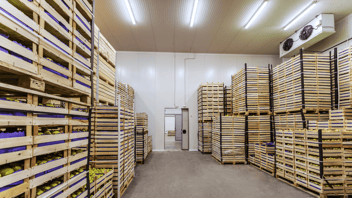
Temperature excursions remain one of the largest operational risks in cold chain logistics. While most operators focus on refrigerated units and truck-based telematics, trailers often create a visibility gap. When detached from tractors or parked in yards, the trailer's interior temperature can go unmonitored.
A modern trailer temperature monitoring system combines low-power GPS tracking with wireless temperature sensors. It delivers cold chain visibility, alerts, and compliance reporting without complex installations or continuous power.
This guide explains how trailer-based GPS and sensor systems work, the challenges of monitoring powered and non-powered trailers, and how low-power systems support compliance at scale.
What Is a Trailer Temperature Monitoring System for Cold Chain Monitoring?
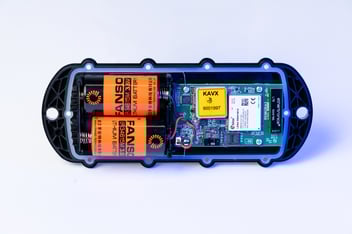
A trailer temperature monitoring system is a self-contained solution that monitors trailer location, movement, and internal environmental conditions using a GPS tracker and wireless temperature sensors.
These systems combine two components:
- A GPS-enabled tracking device mounted to the trailer
- Temperature sensors placed inside the cargo area
The tracker collects location and movement data and acts as a gateway for wireless sensors that measure temperature inside the trailer. That information is transmitted to a cloud platform where operators can view conditions, set alerts, and generate compliance reports.
Truck-based systems depend on power and telematics from the tractor. Trailer-based monitoring operates independently. This distinction matters when trailers are detached, parked overnight, waiting at ports, or swapped between tractors. Independent monitoring ensures temperature control visibility does not disappear when the truck drives away.
Why Trailer-Based Temperature Monitoring Matters in Cold Chain Monitoring
Cold chain logistics doesn't stop when a trailer is parked.
Detached trailers and power loss
Refrigerated trailers can lose power, be unplugged, or sit idle in yards. Without a trailer-based system, fleet managers lose visibility into the right temperature for temperature-sensitive goods during these periods.
Regulatory and compliance pressures
Food safety regulations and pharmaceutical transport guidelines require documented temperature control and audit-ready records. Timestamped logs are no longer optional for many operators handling sensitive materials.
Cost of spoiled or rejected loads
Fresh produce, vaccines, frozen goods, and specialty chemicals can be rejected due to temperature excursions. Even minor deviations can result in full load loss. The financial impact extends beyond spoilage to brand damage and insurance disputes.
How GPS + Sensor Systems Enable Cold Chain Monitoring Visibility
A trailer-based system delivers context and condition monitoring in a single package.
GPS tracking for movement context
GPS tracking provides visibility into route, dwell time, and yard location. It gives operational context to temperature events and supports fleet management workflows.
Temperature sensors for cargo conditions
Wireless sensors measure ambient temperature inside the cargo space. Some deployments use multiple sensors to monitor different zones in large trailers.
Store-and-forward capability
During temporary cellular coverage gaps, devices store data locally and transmit once connectivity resumes. This ensures real-time data integrity even on long-haul routes.
The result is real-time temperature tracking combined with movement visibility, enabling proactive response rather than reactive damage control.
Building a Reliable Trailer Temperature Monitoring System: Three Essential Steps
Step 1: Choosing the Right Trailer Temperature Monitoring System Hardware
The hardware you select determines the long-term success of your system.
Battery-powered GPS trackers
For non-powered trailers, long-life battery-powered devices provide independent monitoring. Digital Matter devices are engineered for multi-year battery life while supporting Bluetooth sensor integrations.
Wireless temperature sensors vs wired probes
Wireless Bluetooth sensors simplify deployment and avoid complex wiring. Wired probes may suit permanently powered refrigerated units, but wireless solutions reduce installation time and maintenance.
Key considerations
- Battery life under expected reporting frequency
- Enclosure rating such as IP68 for harsh environments
- Sensor range and Bluetooth coverage within the trailer
- Reporting configuration aligned with operational risk
Deploy-once hardware reduces downtime and avoids repeated service visits.
Step 2: Deploying Cold Chain Monitoring on Powered and Non-Powered Trailers
Your deployment must account for real-world logistics conditions.
Installation best practices
Trackers should be mounted in protected, discreet areas with adequate signal access. Sensors should be positioned away from doors and cooling vents to accurately reflect temperature inside cargo zones.
Wireless systems eliminate complex installations, allowing rapid roll-out across mixed fleets.
Monitoring during transit and idle periods
Low-power devices monitor continuously during movement and long dwell times. This ensures visibility during yard storage, cross-docking, and overnight parking.
Long-haul and cross-border routes
Cellular IoT connectivity, such as LTE-M and Cat-1bis, supports coverage across regions and international routes. Store-and-forward buffering ensures no data gaps during rural transit.
Step 3: Alerts, Reporting, and Compliance in a Trailer Temperature Monitoring System
Visibility is only useful if operators can act on it.
Temperature threshold alerts
Operators configure preset parameters for acceptable ranges. If thresholds are exceeded, automated alerts are sent to responsible stakeholders.
Alerts can be immediate or delayed to prevent unnecessary notifications during brief door openings.
Automated compliance logs
Systems generate timestamped logs for audits. Historical reports demonstrate compliance for regulators, customers, and insurance providers.
Event-based alerts vs scheduled reporting
Event-based alerts notify teams during excursions. Scheduled reporting provides periodic confirmation that conditions remain stable. Together, they reduce costly human errors associated with manual record-keeping.
Use Cases for Trailer Temperature Monitoring and Cold Chain Monitoring
Several industries benefit from cold chain temperature monitoring devices to protect sensitive goods during transit:
Refrigerated food transport
Maintaining the right temperature for fresh produce and frozen goods ensures load integrity from the distribution centre to retail.
Pharmaceutical and vaccine logistics
Sensitive materials such as vaccines and biologics require documented temperature control throughout transit.
Cold storage overflow and peak demand
Independent trailer monitoring supports temporary storage during peak seasons.
High-value freight
Electronics, specialty chemicals, and other temperature-sensitive goods benefit from integrated monitoring and visibility of movement.
Asset Tracking & Sensor Monitoring with Restotracker
“Archaic” is how Steven Kramer, CEO, and Founder of Restotracker describes the amount of manual logging and paperwork required in traditional water restoration operations.
From employees, vehicles, and valuable equipment across worksites (there is often $7,000–$10,000 worth of equipment on a site), to temperature and humidity readings and insurance-compliant reporting: managing restoration operations has traditionally required hours of manual logging and mountains of paperwork. It also required workers to return to the premises daily to manually record moisture, humidity, and temperature measurements for insurance compliance.
Leveraging Remora2 and Bluetooth® Low Energy, the solution we provided was twofold: providing water restoration companies with traditional equipment, vehicle, and employee tracking while also eliminating second and third-day sensor reading visits through the application of Bluetooth® Low Energy technology.
Aptly branded “RestroTrackIt” by Kramer, the Remora2 features concurrent GPS/GLONASS and Bluetooth® 5.0, enabling location tracking in addition to short-range communication with a wide range of Bluetooth® Low Energy tags and sensors.
- Bluetooth® Low Energy sensor tags are placed on the premises to capture temperature, humidity, water moisture, and more.
- A Remora2 is placed on high-value restoration equipment and provides location tracking while continuously scanning for nearby Bluetooth® Low Energy tags or sensors.
- The Remora2 reports all data from the tag to the Restotrackit software, where it is presented digitally in an exportable report.
Learn more about smarter solutions for cold chain monitoring.
Best Practices for Reliable Trailer Temperature Monitoring System Deployment
Deploying a trailer temperature monitoring system is not just about installing hardware. Long-term reliability depends on how sensors are positioned, how alerts are configured, and how reporting behavior is tuned to match operational risk.
The following best practices help ensure accurate readings, meaningful alerts, and efficient battery performance across powered and non-powered trailers.
Sensor placement strategy
Place sensors at representative cargo locations. Avoid direct airflow from refrigeration units.
Alert tuning
Configure alerts to balance responsiveness with operational noise. Delayed thresholds help prevent false alarms.
Battery optimization
Adjust reporting intervals based on risk profile. Daily heartbeat updates combined with event-triggered reporting maximize battery life.
Combine condition and movement events
Link temperature alerts with door-open events or unexpected movement to improve context and response time.
Why Low-Power Trailer Temperature Monitoring Scales Better
Trailer-based systems offer clear advantages over tractor-dependent solutions, particularly for fleets managing mixed assets, detached equipment, or high trailer-to-tractor ratios.
No dependency on tractor power
Because monitoring hardware operates on its own internal battery, visibility continues even when trailers are detached, staged in yards, or swapped between tractors. This ensures temperature monitoring does not stop during handovers, overnight parking, or idle periods.
Reduced maintenance and downtime
Wireless sensors and battery-powered trackers remove the need for hard wiring into refrigeration units or tractor systems. This reduces installation time, eliminates common wiring failures, and minimizes service calls. The result is faster deployment, lower ongoing maintenance, and less operational disruption across large fleets.
Ideal for rental and mixed fleets
Independent systems simplify deployment across diverse assets, supporting fleet managers responsible for owned, leased, and shared equipment.
Low-power systems also contribute indirectly to fuel efficiency by reducing unnecessary site visits and emergency repositioning.
Digital Matter’s Cold Chain Temperature Monitoring Solutions
Our cold chain solutions provide complete visibility into the location and condition of goods throughout the cold chain. Designed to meet the nuanced needs of temperature-controlled logistics, our solutions include:
- Asset Tracking Devices: Bluetooth-enabled, battery-powered, and wired devices that communicate with sensors attached to powered or non-powered assets at any stage of the supply chain.
- Data Loggers: Communicate with integrated sensors to monitor temperature, humidity, moisture, and more. While they provide continuous data collection, most data loggers are designed for stationary environments like warehouses. Because cold chain logistics are largely mobile, involving trucks and containers in transit, standalone data loggers are often not the ideal solution for real-time monitoring.
Our cold chain temperature monitoring solutions are designed to provide seamless visibility and control over temperature-sensitive assets throughout every stage of the supply chain. With flexible sensor integration, real-time data insights, and automated alerts, our devices ensure product integrity, regulatory compliance, and operational efficiency.
Comprehensive Data Monitoring: Track essential parameters such as temperature, humidity, moisture, and door events. Geofencing capabilities trigger alerts when assets move into or out of designated zones, ensuring visibility across the supply chain.
Bluetooth® Low Energy Integration: Our Bluetooth-enabled devices communicate with BLE tags and sensors to monitor environmental conditions. This enables effortless data collection from nearby sensors, enhancing your cold chain monitoring capabilities.
Ensuring Safety and Compliance: Automated monitoring and reporting tools help maintain compliance with industry regulations, safeguarding sensitive goods like food and pharmaceuticals from temperature deviations.
Proactive Risk Management: Receive instant alerts when environmental conditions change, enabling quick action to prevent product spoilage or equipment failure at any stage of the cold chain.
Fleet and Equipment Insights: Monitor refrigerated trucks and trailers beyond basic temperature tracking by collecting data on driver behavior, equipment status, and vehicle safety.
Effortless Record Keeping: Automated reporting and cloud integration eliminate manual paperwork, reduce errors, and ensure regulatory compliance with accurate, real-time data logs.
Seamless Integration with Your Systems: Our GPS-enabled solutions work with existing platforms to provide real-time insights and reports, streamlining your operations without adding complexity.
View our Cold Chain GPS Tracking Devices.
Building Cold Chain Confidence at Scale with a Trailer Temperature Monitoring System
A modern trailer temperature monitoring system delivers more than location updates. It provides verified compliance, proactive response, and reduced loss exposure across cold chain monitoring operations.
By combining GPS tracking devices with Bluetooth-enabled temperature sensors, operators gain visibility into movement and cargo condition without relying on continuous trailer power or complex installations.
Digital Matter’s scalable solutions enable independent trailer monitoring across food, pharma, and logistics environments. With long-life battery operation, indoor and outdoor positioning support, and flexible sensor integration, fleets can deploy once and start protecting cargo immediately.
Need help?
Explore our cold chain temperature monitoring devices or contact us to discuss how we can help improve visibility, strengthen compliance, and build confidence across your cold chain operations.

Melissa Craig - Digital Marketing Manager
Melissa Craig is a Digital Marketing Manager at Digital Matter, with a background spanning marketing analytics, customer experience, and data-driven strategy. She holds a Bachelor of Commerce in Marketing from Curtin University and brings several years of experience analyzing customer journeys, performance data, and system workflows across technology and services environments. Prior to joining Digital Matter, Melissa led customer experience and process-mapping initiatives, translating complex data and operational insights into practical recommendations. At Digital Matter, her work supports educational content and analysis related to IoT asset tracking, GPS deployment, and how connected devices are adopted and evaluated by businesses. Focus areas: IoT and asset tracking use cases, customer journey analysis, data and performance insights, adoption and optimization of connected technologies.