IoT Asset Tracking Solutions: How Systems, Devices, and Sensors Work
Our mission is to help businesses connect, protect, and derive more value from their assets. As a leading global innovator, developer, and supplier of IoT solutions, we drive continuous innovation to enable our partners to deploy confidently at scale worldwide.

IoT asset tracking has evolved far beyond placing dots on a map. Modern systems now collect actionable intelligence about asset location, condition, and utilization, enabling businesses to make operational decisions based on real-world data rather than assumptions.
Where legacy machine-to-machine deployments focused primarily on vehicle tracking, today’s IoT asset-tracking technology supports massive fleets of distributed assets through low-power connectivity, scalable cloud platforms, and intelligent hardware designed for long-term deployment. Advances in LPWAN networks, battery efficiency, and device intelligence have significantly reduced deployment costs while expanding visibility across industries.
This article explains how an asset tracking IoT solution works from end to end. We explore system architecture, hardware types, connectivity methods, reporting behavior, sensors, and real-world use cases to show how modern IoT asset tracking systems deliver measurable operational value.
How an IoT Asset Tracking System Works (The Architecture)
At its core, an IoT asset-tracking system follows a structured data flow that transforms physical activity into digital insights.
Asset → Device or Sensor → Connectivity Network → Device Management Layer → End User Platform
- A device or sensor is attached to an asset.
- The device collects data such as movement, condition, or environmental readings.
- Information is transmitted through a connectivity network.
- A middleware layer manages configuration and security.
- Data appears inside customer applications for analysis and action.
Tracking Assets: Device vs. Cloud Processing
Modern IoT-enabled asset tracking distributes location processing between the tracking device and the cloud, depending on the technology used.
Some devices perform positioning calculations in the cloud. In these cases, the device scans for GNSS signals, nearby Wi-Fi networks, or cell towers and sends that raw data for cloud-based location solving. This approach reduces on-device power consumption and extends battery life.
Other devices, such as GPS-based trackers, calculate location directly on the device using satellite signals. The cloud then handles large-scale data processing, analytics, and integration with asset management platforms. This balance supports long battery life while maintaining visibility across distributed physical assets.
Digital Matter offers multiple tracking technologies, including Core, Edge, Fusion, and dedicated GPS devices; each designed for different accuracy, battery life, and environmental requirements. You can learn more about how these technologies compare in our guide to IoT Asset Tracking Technologies.
The Hardware: Types of IoT Asset Tracking Devices
Hardware selection begins with one question: Does the asset have power?
Different assets require different IoT asset trackers depending on mobility, environment, and reporting expectations.
Battery-Powered Trackers (The Deploy Once Standard)
Battery-powered devices are designed for assets without continuous power sources.
Typical assets include:
- Containers
- Trailers
- Pallets
- Livestock
- Remote infrastructure
Key characteristics of battery-powered devices:
- Long battery life up to ten years
- IP68 rugged housing
- Replaceable lithium batteries
- Low-power communication protocols
Battery-powered tracking devices:
These devices enable real-time asset tracking without wiring, improving asset management efficiency while minimizing maintenance requirements.
Rugged battery-powered GPS tracker for high-precision outdoor asset tracking.
- Powered by 3 x AA user-replaceable batteries with 10+ years battery life
- Location via GNSS and Cell Tower data
- Intelligent power management with low battery alerts
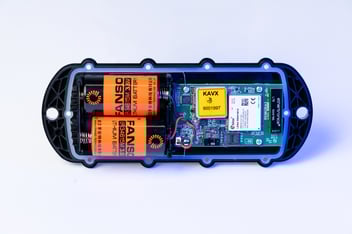
Rugged GPS tracker and Bluetooth® Gateway with the longest battery life on the market for asset tracking and wireless condition monitoring.
- Powered by 2 x D Cell user-replaceable batteries with 10+ years battery life
- Supports aggressive 'second-by-second' tracking performance including highly accurate speed, run hour, and odometer monitoring
- Location via GNSS and Cell Tower data
- Bluetooth® 5.2 Gateway for tagged asset management and sensor monitoring
- Intelligent power management and low battery alerts
- Magnetic tamper detection
Compact and rugged battery-powered GPS tracker for indoor/outdoor asset tracking.
- Powered by 3 x AAA user-replaceable batteries with 10+ years battery life
- Location via GNSS, Wi-Fi Access Point, and Cell Tower scanning data
- Intelligent power management with cloud-based location solving and low battery alerts
Wired & Vehicle Trackers
Powered assets allow for additional capabilities because energy is continuously available.
Typical assets include:
- Fleet vehicles
- Heavy equipment
- Generators
- Powered machinery
Key features of wired & vehicle trackers:
- Ignition detection
- Continuous updates
- Remote immobilization
- Driver identification
Wired & vehicle tracking devices:
These devices provide precise location tracking combined with operational telemetry, helping organizations optimize asset utilization and improve safety outcomes.
Rugged wired GPS tracker with Bluetooth® Gateway, extensive I/Os, global 4G/2G connectivity, and optional Iridium Satellite for critical or out-of-coverage deployments.
- Wire into power for real-time vehicle, fleet, and equipment tracking
- Bluetooth® gateway to report on BLE tags and sensors, wireless Driver ID
- Flexible Input Monitoring - 4 x Digital Inputs, 1 x Analog Input, 2 x Switched Ground Digital Outputs, 1 x Ignition Digital Input, Switched Power Out, RS232
- Supports Accident Detection, Driver ID, Driver Behavior, Remote Immobilization
- Waterproof and ultra-rugged (IP68)
Wired GPS tracker and Bluetooth® Gateway with flexible I/O options for vehicle and fleet management and wireless sensor monitoring.
- Wire into power for real-time vehicle, fleet, and equipment tracking
- Bluetooth® gateway to report on BLE tags and sensors, wireless Driver ID
- Flexible Input Monitoring - 1 x Ignition Digital Input, 3 x Digital Inputs, 1 x Analog Input, 1 x Switched Ground Digital Output, Switched Power Out
- Supports Accident Detection, Driver ID, Driver Behavior, Remote Immobilization
- Backup battery in case of loss of power or tampering
The G62 LoRaWAN is Digital Matter's robust and ultra-rugged vehicle and heavy equipment tracking device with inputs/outputs for fleet management, equipment monitoring on LoRaWAN networks.
- High-precision GPS/GLONASS tracking device
- Weatherproof and ultra-rugged IP67 Housing
- Internal Backup Battery in case of loss of power or tampering
- 1 x Analog Inputs, 2 x Digital Inputs, 1 x Switched Ground Digital Output, 1 x Ignition Digital Input
- On-device Odometer Readings
- Highly sensitive radio receiver is available in 868 or 902 – 928MHz versions for global LoRaWAN® connectivity.
Sensor Hubs & Gateways
Not all IoT deployments revolve around movement. Many focus on collecting environmental or operational data.
Sensor hubs act as bridges between sensors and the cloud.
Examples include:
- Hawk IoT Data Logger
- Bluetooth-enabled Oyster3 and Remora3 devices
These gateways collect readings from nearby sensors and transmit aggregated IoT asset tracking data through a single connection. This approach improves scalability while supporting inventory management and condition monitoring use cases.
Location Technologies: It’s More Than Just GPS
Modern IoT asset tracking technology combines multiple positioning methods to balance accuracy and power consumption.
GNSS (GPS)
Provides high-precision outdoor positioning and is ideal for mobile assets operating in open environments.
Wi-Fi Location Scanning
Used in warehouses and dense urban areas. Devices scan nearby Wi-Fi networks and resolve location in the cloud, saving energy by avoiding satellite locks.
Cell Tower Location
Provides approximate positioning using cellular infrastructure. It consumes very little power and serves as a fallback when GPS signals are weak.
Bluetooth Low Energy (BLE)
Enables room-level proximity tracking by associating tagged assets with nearby gateways.
Cloud-Based Location Solving
Digital Matter’s location engine shifts processing from device hardware to the cloud. By uploading scan data instead of calculating coordinates onboard, devices can extend battery life by five to ten times compared to traditional GPS-only designs.
Smart Reporting Behavior & Power Management
One of the most overlooked aspects of IoT asset tracking involves reporting behavior.
Adaptive Tracking
Devices automatically adjust reporting frequency based on movement. When assets remain stationary, reporting slows. When movement begins, updates increase.
Sleep Mode
Ultra-low power sleep states allow devices to remain dormant for long periods while still monitoring activity triggers.
Edge Processing
Devices filter collected data before transmission. For example, a temperature sensor may only report when thresholds are exceeded, reducing network usage and improving battery longevity.
This intelligent behavior allows organizations to monitor assets at scale without excessive connectivity costs.
Sensors and Condition Monitoring
IoT asset tracking is not only about where assets are but also how they are performing.
Temperature and Humidity Monitoring
Used in cold chain logistics to maintain compliance and product integrity.
Impact, Tip, and Rotation Detection
Accelerometers detect abnormal motion events such as drops or equipment misuse.
Door Open and Close Monitoring
Magnetic sensors improve security by identifying unauthorized access.
Tag-Agnostic Integration
Digital Matter devices support third-party Bluetooth sensors, enabling flexible deployments across industries.
By combining location and condition insights, organizations gain deeper asset management visibility and improved asset utilization.
The Management Layer: Device Manager & Security
Hardware alone does not create value. Effective asset management depends on device control and data security.
Over-the-Air Updates
Firmware and configuration parameters can be updated remotely, allowing fleets to evolve without physical servicing.
Security Architecture
Devices use strong authentication and encryption to protect communications and prevent unauthorized access.
Open Integration
Data can be delivered to existing business systems through webhooks, APIs, or TCP integrations, ensuring IoT asset tracking integrates seamlessly into operational workflows.
Core Use Cases for IoT Asset Tracking
Across industries, IoT asset tracking involves transforming operational data into decisions that improve asset management outcomes.
Here's how:
Logistics and Supply Chain
Track and analyze containers of all shapes, sizes, and values with long-life battery-powered GPS tracking devices.
Cold Chain Monitoring
Manage temperature-sensitive vehicles and cargo with real-time GPS tracking and cold chain monitoring.
Equipment Tracking
Track and analyze equipment of all shapes, sizes, and values with industry-leading battery life and reliability.
Smart Agriculture
Increase the overall quality and quantity of agricultural products with GPS tracking devices and IoT agriculture sensors.
Building a Reliable Asset Tracking IoT Solution
A successful IoT asset tracking deployment balances three elements:
- Power: selecting battery or wired devices based on asset behavior
- Connectivity: choosing networks aligned with geography and usage
- Device Quality: ensuring hardware survives real-world environments
When these elements align, organizations gain improved asset utilization, enhanced operational visibility, and stronger control over distributed assets.
Digital Matter’s flexible hardware ecosystem enables businesses to deploy scalable tracking architectures tailored to their needs.
Our GPS asset tracking solutions offer both battery-powered and wired GPS tracking solutions, allowing you to seamlessly track assets with scalable IoT hardware, designed for 'deploy once' asset management.
We also offer comprehensive equipment monitoring, including GPS fleet tracking and management solutions, wired into assets for real-time monitoring and precise location tracking.
If you're looking to build a reliable IoT asset-tracking solution, explore our range of GPS devices or speak with a specialist to discuss the right solution for your application.

Melissa Craig - Digital Marketing Manager
Melissa Craig is a Digital Marketing Manager at Digital Matter, with a background spanning marketing analytics, customer experience, and data-driven strategy. She holds a Bachelor of Commerce in Marketing from Curtin University and brings several years of experience analyzing customer journeys, performance data, and system workflows across technology and services environments. Prior to joining Digital Matter, Melissa led customer experience and process-mapping initiatives, translating complex data and operational insights into practical recommendations. At Digital Matter, her work supports educational content and analysis related to IoT asset tracking, GPS deployment, and how connected devices are adopted and evaluated by businesses. Focus areas: IoT and asset tracking use cases, customer journey analysis, data and performance insights, adoption and optimization of connected technologies.