Connectivity and location technologies work together to deliver reliable asset tracking. Connectivity determines how a device communicates with the cloud, while location technologies determine where an asset actually is. Choosing the right combination affects battery life, coverage, accuracy, deployment costs, and long-term performance.
There is no single best network for every deployment. The right choice depends on where your assets operate, how often they move, how frequently they need to report, and whether they have a permanent power source.
Successful asset tracking deployments balance three key elements:
For example, battery-powered trackers attached to trailers or containers typically use LTE-M or NB-IoT because these cellular networks are designed for low-power operation and extended battery life. Meanwhile, powered fleet vehicles may benefit from Cat-1bis or 4G connectivity to support more frequent reporting and larger data payloads. LoRaWAN® is another excellent option where private or public LoRaWAN infrastructure is already available.
Connectivity and location technologies serve two different purposes within an asset tracking solution.
Connectivity determines how information is transmitted from the tracking device to your software platform. Technologies such as LTE-M, NB-IoT, Cat-1bis, LoRaWAN®, and satellite enable devices to send location, status, and sensor data.
Location technologies determine where an asset is. Depending on the deployment, Digital Matter devices may use GNSS (GPS), Wi-Fi Positioning, Bluetooth® Low Energy (BLE), Cell Tower Location, or a combination of these technologies to provide reliable positioning while balancing battery life and performance.
The answer depends on the application.
When comparing LTE-M vs NB-IoT, both technologies belong to the LPWAN family and are designed specifically for battery-powered IoT devices. They offer excellent coverage and low power consumption while supporting long-life GPS asset tracking deployments.
In general:
Digital Matter supports both technologies across many of its battery-powered tracking devices, allowing solution providers to select the most appropriate connectivity for each deployment.
Yes. Many Digital Matter active GPS trackers are designed for global deployments using regional and worldwide cellular technologies.
Devices such as the Oyster3 Global and Remora3 Global use 4G LTE Cat-1bis with 2G fallback to provide reliable connectivity across multiple networks, making them suitable for international logistics, global supply chain operations, and cross-border equipment tracking. For deployments operating in regional LPWAN environments, LoRaWAN® devices provide another flexible connectivity option.
Most cellular GPS trackers require an IoT SIM card to communicate over mobile networks.
The SIM securely identifies the device on the network and enables it to transmit precise location data to your preferred software platform. Every SIM also contains a unique ICCID (Integrated Circuit Card Identifier), allowing organizations to manage thousands of connected assets through centralized connectivity management processes.
Some devices instead communicate using LoRaWAN®, while Bluetooth® tags rely on nearby gateways rather than their own cellular connection.
Coverage interruptions are expected in many real-world environments.
Assets may enter remote regions, underground facilities, warehouses, shipping containers, or areas with reduced signal strength. Rather than stopping completely, Digital Matter devices continue collecting GPS and sensor information before forwarding stored data once connectivity becomes available again.
Many devices also combine GNSS with Wi-Fi positioning and cell-tower location technologies to improve asset visibility across challenging indoor and outdoor environments.
Battery life depends on more than the network alone. Reporting frequency, movement behavior, positioning technology, and environmental conditions all influence how long a device operates.
Generally:
Digital Matter further extends battery life through adaptive tracking, intelligent reporting behavior, cloud-based location solving, and onboard power-saving mode functionality.
The answer starts with the asset itself.
Questions to consider include:
These factors determine whether LTE-M, NB-IoT, Cat-1bis, LoRaWAN®, Bluetooth®, Wi-Fi positioning, or a combination of technologies delivers the best outcome.
Digital Matter devices are designed to support a broad range of IoT applications, giving customers the flexibility to match connectivity with operational requirements rather than forcing every deployment onto a single network.
Connectivity is much more than simply getting a device online. It directly influences how often a tracker can report, how long the battery lasts, where the device can operate, and the overall cost of deployment.
Selecting the right connectivity technology helps optimize:
Choosing the wrong network can result in unnecessary airtime costs, reduced battery life, inconsistent coverage, or reporting behavior that doesn't match the asset being tracked.
Although they work together, connectivity and location technologies perform different roles within an IoT asset tracking solution.
|
Connectivity Technologies |
Location Technologies |
|---|---|
|
LTE-M |
GNSS (GPS, Galileo, GLONASS, BeiDou) |
|
NB-IoT |
Wi-Fi Positioning |
|
Cat-1bis |
Bluetooth® Low Energy |
|
LoRaWAN® |
Cell Tower Location |
|
Satellite |
Multi-technology positioning |
Connectivity determines how information reaches your platform, while location technologies determine how the device calculates its position. Digital Matter devices combine multiple technologies to improve reliability across a wide range of environments.
Choosing the right connectivity technology is one of the most important decisions when designing an asset tracking solution. Each option offers different advantages depending on battery life requirements, coverage, reporting frequency, mobility, and deployment environment.
The comparison below provides a high-level overview of the most common connectivity technologies used across Digital Matter devices.
|
Connectivity |
Best For |
Battery Life |
Coverage |
Typical Applications |
|---|---|---|---|---|
|
LTE-M |
Mobile battery-powered assets |
Excellent |
Widely available |
Trailers, containers, equipment |
|
NB-IoT |
Static or low-mobility assets |
Excellent |
Regional availability |
Remote infrastructure, utilities |
|
Cat-1bis |
Powered assets requiring frequent reporting |
Moderate |
Excellent global coverage |
Fleet management, powered equipment |
|
LoRaWAN® |
Private or public LPWAN deployments |
Excellent |
Network dependent |
Agriculture, utilities, campuses |
|
Bluetooth® Low Energy |
Sensors and nearby asset monitoring |
Excellent |
Short range |
Temperature sensors, BLE tags |
Every connectivity technology has strengths, and selecting the right one depends on how and where your assets operate.
LTE-M has become one of the most widely used technologies for battery-powered GPS asset tracking. It combines excellent mobility support with low power consumption, making it well-suited to assets that regularly move between cellular towers.
Typical applications include:
NB-IoT is designed for low-bandwidth IoT deployments where devices spend long periods in the field and only need to transmit relatively small amounts of data.
It is commonly used for:
Cat-1bis provides higher bandwidth than LTE-M or NB-IoT while maintaining broad global coverage.
Because it supports larger data payloads and more frequent communication, it is often selected for:
LoRaWAN® offers long-range, low-power communications where compatible network infrastructure is available.
It is particularly effective for:
Bluetooth® is not typically used as the primary communications network for GPS tracking.
Instead, Digital Matter devices use Bluetooth to communicate with nearby sensors and tags before forwarding information over a cellular or LoRaWAN connection. This enables a single tracker to monitor multiple connected devices while minimizing deployment costs.

Connectivity plays a major role in determining battery life, but it is only one part of the equation.
Every time an asset tracker wakes to acquire a GPS location, connect to a network, and transmit data, it consumes energy. Devices configured to report every few minutes will naturally consume more power than those reporting only when movement occurs.
Digital Matter extends battery life through a combination of intelligent engineering approaches, including:
Rather than transmitting continuously, many Digital Matter devices only communicate when meaningful events occur, allowing battery-powered trackers to operate for years without intervention.
Selecting the right connectivity technology is therefore about balancing visibility with battery life. More frequent updates are not always better, particularly for non-powered assets that remain stationary for extended periods.
Modern asset tracking deployments often span multiple countries, carriers, and network technologies. Selecting the right connectivity partner helps ensure assets remain connected as they move across regions.
Most cellular asset trackers use an IoT SIM card that authenticates the device on the mobile network. Every SIM contains a unique ICCID, allowing organizations to identify and manage thousands of deployed devices through a single connectivity management platform.
Global connectivity also depends on carrier agreements and roaming support. Some technologies have broader international availability than others, which is one reason Cat-1bis has become increasingly popular for global deployments.
Digital Matter devices support multi-network connectivity across numerous carriers, helping solution providers maintain reliable communications while simplifying fleet-wide connectivity management.
The best connectivity option depends on the asset being tracked rather than the technology itself.
|
Asset Type |
Recommended Connectivity |
Typical Devices |
|---|---|---|
|
Trailers and shipping containers |
LTE-M / NB-IoT |
|
|
Global logistics assets |
Cat-1bis |
|
|
Fleet vehicles |
Cat-1bis |
|
|
Agriculture and remote infrastructure |
LoRaWAN® or LTE-M |
|
|
Indoor and mixed-environment assets |
Wi-Fi positioning + LTE-M + Bluetooth |
|
|
BLE sensors and tagged assets |
Bluetooth® gateway with cellular uplink |
Important: Matching connectivity to the asset's operating environment helps maximize battery life, improve GPS location accuracy, reduce operational costs, and provide consistent visibility across logistics, fleet management, and supply chain operations.
Get up to speed on the terminology shaping IoT asset tracking. From cellular connectivity and location technologies to device behavior, power optimization, and deployment concepts across the Digital Matter ecosystem.
Discover how selecting the right connectivity technology helps improve visibility, reliability, and battery life across a wide range of asset tracking applications.
Track assets anywhere in the world using devices that support global cellular connectivity and roaming across multiple networks. Whether monitoring shipping containers, rental equipment, or international fleets, Digital Matter devices help maintain visibility across borders while balancing coverage, battery life, and deployment costs.
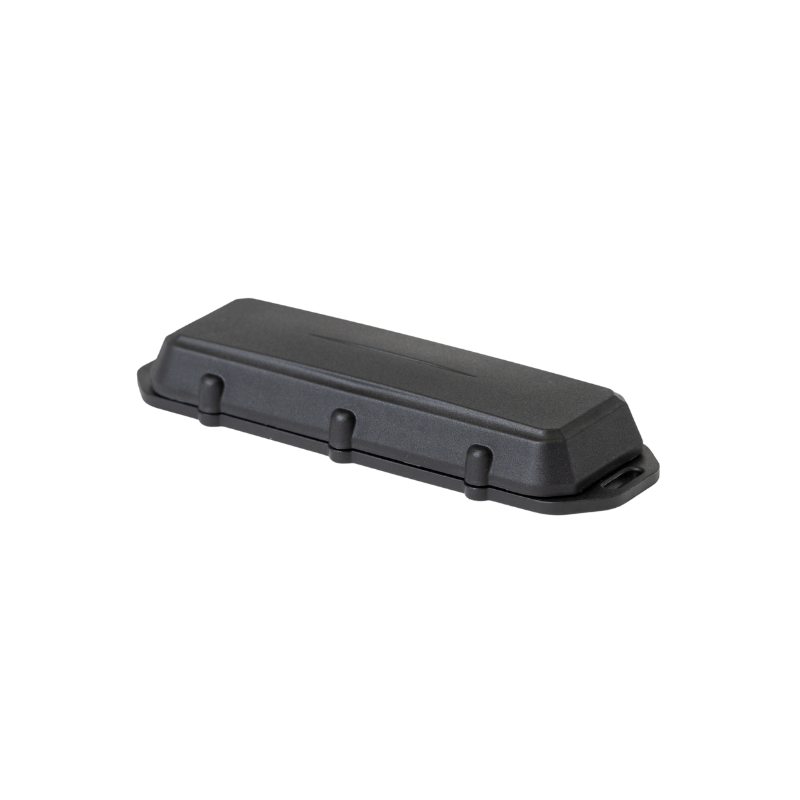
Trailers and containers often spend long periods disconnected from external power while moving across depots, ports, and customer sites. Battery-powered LTE-M and NB-IoT devices provide reliable long-term tracking with movement-based reporting and intelligent power management.
Connectivity plays an important role in maintaining visibility throughout the supply chain. Combining GNSS, Wi-Fi positioning, Bluetooth®, and cellular communications enables organizations to monitor asset movement, improve logistics planning, and respond quickly to operational issues.
Agricultural operations frequently span large geographic areas where network availability can vary considerably. Depending on regional infrastructure, LTE-M, NB-IoT, or LoRaWAN® connectivity allows operators to monitor equipment, livestock, water infrastructure, and remote assets while maintaining long battery life.
Cold chain applications rely on continuous monitoring of both asset location and product condition. Bluetooth sensors paired with GPS-enabled gateways enable temperature, humidity, and location monitoring while reducing hardware costs across refrigerated transport and storage operations.
Discover how organizations around the world are using Digital Matter connectivity solutions to solve real operational challenges.
Learn how Australian Wildlife Conservancy uses Digital Matter’s Hawk IoT Data Logger and Oyster3 GPS tracker to monitor feral cat traps and goat herds across remote sanctuaries, enabling fast interventions, reducing costs and risks, and protecting native species and habitats.
Products: Oyster3 | Hawk IoT Data Logger
John Holland, a leading engineering and contracting provider, delivers large-scale infrastructure, rail, and building projects. With strict regulations around spoil and waste disposal, the company requires innovative solutions to manage and track the movement of contaminated materials.
Products: Oyster3 | Remora3
Outcomex is improving productivity and safety across rural Australia with LoRaWAN®, Digital Matter devices, and their own in-house application, Farmdeck.
Products: Guppy LoRaWAN® | Yabby LoRaWAN®
Stay up to date with the latest trends, insights, and innovations related to Connectivity.
Choose the right connectivity technology for your deployment using Digital Matter's range of battery-powered and wired asset-tracking devices.
29 Products
Wired
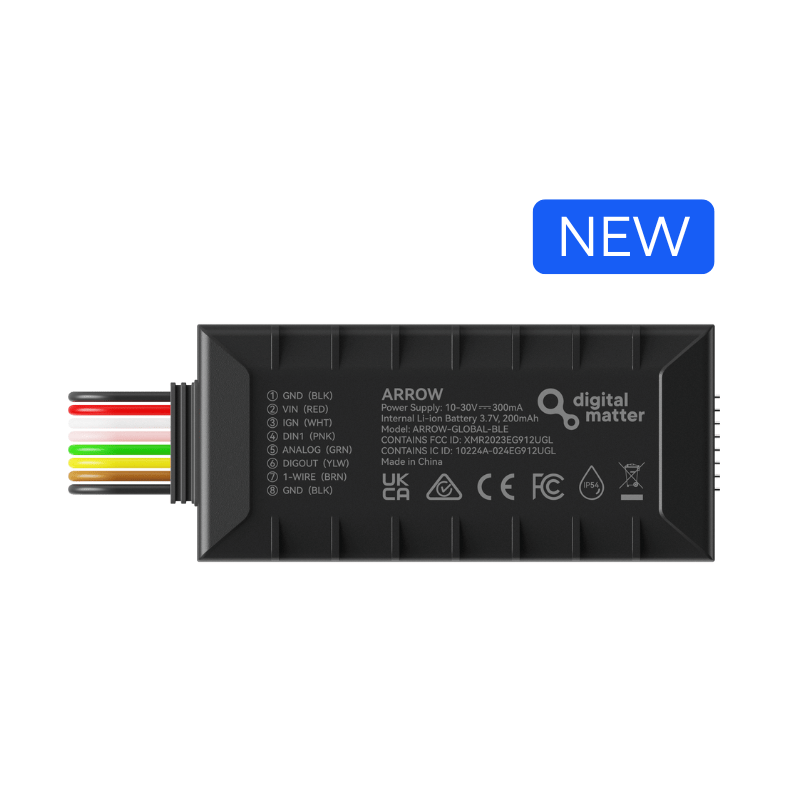
Arrow Global BLE
4G LTE Cat 1bis 2G
Wired high-precision GPS tracker and Bluetooth® Gateway with flexible I/O options for vehicle and fleet management and wireless sensor monitoring.
Battery-Powered
Barra Core
NB-IoT
Compact and rugged battery-powered asset tracker with magnetic activation and tamper detection for ultra-low-cost indoor/outdoor visibility.
Battery-Powered
Barra Edge
LTE-M (Cat-M1) NB-IoT
Compact and rugged battery-powered GPS tracker with magnetic activation and tamper detection for cost-effective indoor/outdoor asset tracking.
Battery-Powered
Barra Fusion Cat 1bis
4G LTE Cat 1bis
Compact and rugged battery-powered GPS tracker with 4G Cat 1bis connectivity for cost-effective indoor/outdoor asset tracking.
Battery-Powered
Barra GPS
LTE-M (Cat-M1) NB-IoT
Compact and rugged battery-powered GPS tracker with magnetic activation and tamper detection for cost-effective outdoor asset tracking.
Battery-Powered
Barra Radar BLE
Bluetooth®
Battery-powered Bluetooth® radar sensor with millimeter-level precision for level and object detection.
OBDII
Bolt2
LTE-M (Cat-M1) NB-IoT
OBDII-powered GPS tracker with back-up battery for plug-and-play fleet and vehicle tracking.
OBDII Wired
Dart3 BLE
LTE-M (Cat-M1) NB-IoT Bluetooth®
Wired GPS tracker and Bluetooth® Gateway with flexible I/O options for vehicle and fleet management and wireless sensor monitoring.
Battery-Powered
DM Dot Glow
Bluetooth®
Ultra-rugged Bluetooth Low Energy beacon with long battery life and integrated LED for easy asset identification and track and trace applications.
Battery-Powered
DM Dot Sensor
Bluetooth®
Ultra-rugged Bluetooth Low Energy sensor beacon with impact, temperature, humidity, and magnet detection for track and trace applications.
Battery-Powered
DM Dot Tag
Bluetooth®
The DM DOT Tag is an ultra-rugged Bluetooth Low Energy beacon designed for long-life, wire-free track and trace applications.
Wired
G150
2G 4G LTE Cat 1bis Iridium Satellite Bluetooth®
Rugged wired GPS tracker with Bluetooth® Gateway, extensive I/Os, global 4G/2G connectivity, and optional Iridium Satellite for critical or out-of-coverage deployments.
Wired
G70 BLE
LTE-M (Cat-M1) NB-IoT Bluetooth®
Rugged wired GPS tracker and Bluetooth® Gateway with flexible I/O options for fleet, vehicle, and equipment management in harsh environments and wireless sensor monitoring.
Battery-Powered
Griffin Air
4G LTE Cat 1bis Bluetooth® 2G
The Griffin Air is an airline-certified GPS tracker built for cargo and supply chain applications, combining automatic flight detection, global 4G connectivity, and 7+ year battery life in a rugged, compact device that tracks assets seamlessly from air to ground.
Battery-Powered Wired
Hawk Pro
LTE-M (Cat-M1) NB-IoT Bluetooth®
The Hawk Pro is a robust plug-and-play IoT data logger and sensor hub designed to support an extensive range of sensor integrations.
Battery-Powered
Manta Fusion
LTE-M (Cat-M1) NB-IoT Bluetooth®
Rugged battery-powered GPS tracker and Bluetooth® Gateway with magnetic activation and tamper detection for asset tracking and wireless condition monitoring.
Battery-Powered
Manta GPS
LTE-M (Cat-M1) NB-IoT
Rugged battery-powered GPS tracker for high-precision outdoor asset tracking.
Battery-Powered
Oyster Edge
LTE-M (Cat-M1) NB-IoT Bluetooth®
Rugged battery-powered GPS tracker and Bluetooth® Gateway for asset tracking and wireless condition monitoring.
Battery-Powered
Oyster3 BLE
LTE-M (Cat-M1) NB-IoT Bluetooth®
Rugged battery-powered GPS tracker and Bluetooth® Gateway for asset tracking and wireless condition monitoring.
Battery-Powered
Oyster3 Global
2G 4G LTE Cat 1bis
Rugged battery-powered GPS tracker with 4G/2G connectivity for global asset visibility.
Battery-Powered
Oyster3 GPS
LTE-M (Cat-M1) NB-IoT
Rugged battery-powered GPS tracker for high-precision outdoor asset tracking.
Battery-Powered
Oyster3 LoRaWAN®
LoRaWAN®
Rugged battery-powered GPS tracker for high-precision outdoor asset tracking on LoRaWAN networks.
Battery-Powered
Remora3
LTE-M (Cat-M1) NB-IoT Bluetooth®
Rugged GPS tracker and Bluetooth® Gateway with the longest battery life on the market for asset tracking and wireless condition monitoring.
Battery-Powered
Remora3 Global
2G 4G LTE Cat 1bis Bluetooth®
Rugged GPS tracker and Bluetooth® Gateway with 4G/2G connectivity for global asset tracking and wireless condition monitoring.
Battery-Powered
Wi-Fi Beacon
Easy to deploy, battery-powered WiFi beacon for improved indoor tracking accuracy.
Battery-Powered
Yabby Edge Cellular
LTE-M (Cat-M1) NB-IoT
Compact and rugged battery-powered GPS tracker for indoor/outdoor asset tracking.
Battery-Powered
Yabby Edge LoRaWAN®
LoRaWAN®
Compact and rugged battery-powered GPS tracker for indoor/outdoor asset tracking on LoRaWAN networks.
Battery-Powered
Yabby3
LTE-M (Cat-M1) NB-IoT
Compact and rugged battery-powered GPS tracker for reliable outdoor asset tracking.
Battery-Powered
Yabby3 LoRaWAN®
LoRaWAN®
Compact and rugged battery-powered GPS tracker for outdoor asset tracking on LoRaWAN networks.
Selecting the right connectivity technology is about more than choosing a network. Successful asset tracking deployments balance battery life, coverage, reporting behaviour, mobility, and operational requirements to deliver reliable long-term visibility.
Digital Matter's portfolio of LTE-M, NB-IoT, Cat-1bis, LoRaWAN®, Bluetooth®, and hybrid positioning devices allows organizations to choose the connectivity that best matches their assets and operating environments. Whether you're tracking equipment across remote job sites, monitoring supply chain assets around the world, or managing connected devices across a national fleet, the right connectivity strategy helps maximize performance while reducing operational complexity.
Although LTE-M and NB-IoT are commonly referred to as 4G technologies, they remain important parts of the long-term 5G roadmap for Massive Machine-Type Communications (mMTC). Mobile operators continue investing in these standards, making them a future-ready choice for long-life IoT deployments.
Devices Designed & Manufactured
Global Channel Partners
Countries With Active Device
End Points
Global Offices
Explore our knowledge base for getting started guides, technical documentation, certifications, and more.